
Clogged Drain Repair
Kitchen, bath, laundry and floor drain clogs cleared at the source.

Zanesville, Ohio 43701
Slow sinks, gurgling toilets, a basement floor drain that backs up after rain. Find out what is causing it in your Zanesville home, then call to talk with an independent local drain and sewer provider about price and timing.
A slow sink, a gurgling toilet and water on the basement floor often trace back to one blocked line. This short video walks through the warning signs and how a local provider finds and clears the clog in a Zanesville home.
Drain cleaning removes what is blocking a pipe so water and waste flow freely again. In Zanesville that usually means grease and soap in kitchen lines, hair in tubs, wipes and paper in toilets, and roots or scale in the main sewer lateral that runs under the yard to the city sewer. A provider clears it with a cable machine or a high-pressure water jet and, when the cause is unclear, sends a camera down to look.
Zanesville's housing is old. Census estimates put roughly 40 percent of the city's homes as built in 1939 or earlier, and most of the rest before 1980. That means many laterals are clay tile or cast iron, both of which develop joints, scale and cracks that a modern plastic line does not. A clog that keeps returning is often a symptom of the pipe, not just what went down it.
The city maintains the sewer main; the homeowner is responsible for the lateral from the main to the house. This site explains each problem in plain terms, from fixing a single clogged drain to full sewer line replacement, so you know what to ask before anyone starts work.

Pick the problem closest to yours. Every service is one call away, 24 hours a day.
Kitchen, bath, laundry and floor drain clogs cleared at the source.
When the old clay or cast iron line has failed in too many places.
High-pressure water that scours grease, scale and roots off the pipe wall.
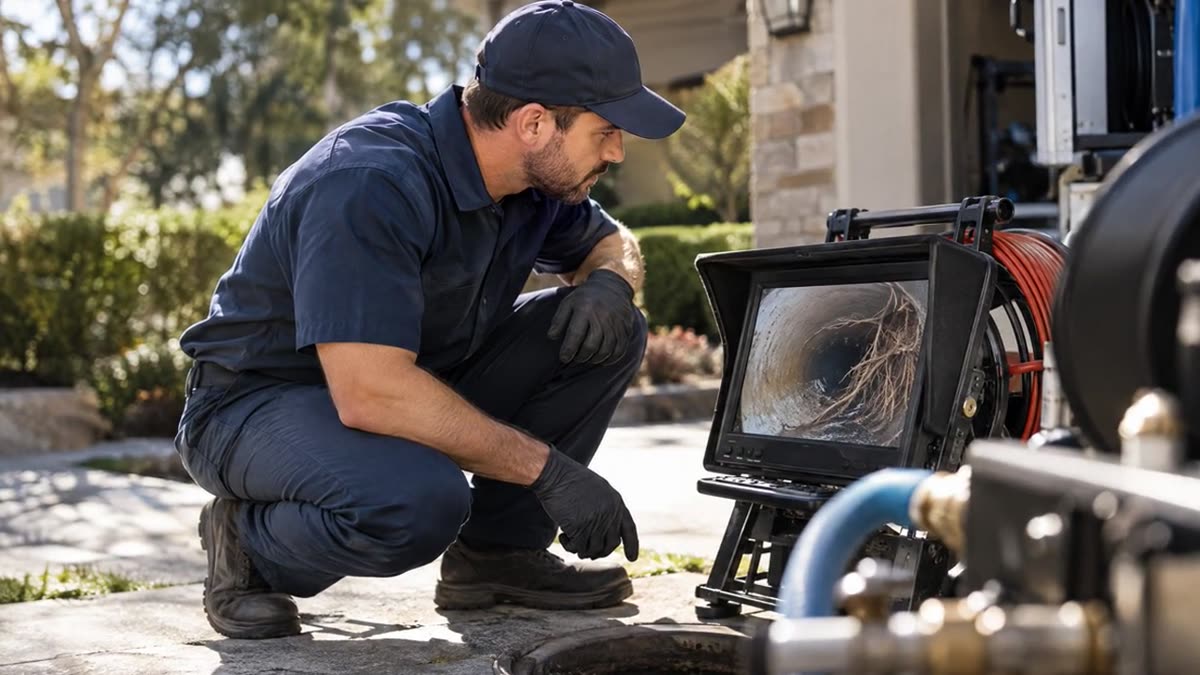
Video of the inside of the line, so the fix matches the problem.
Sewage coming up a floor drain or every fixture backing up at once.
From a single clogged sink to a new line out to the street, this is the kind of work local providers take on.




Representative photos of the kind of drain and sewer work local providers handle.
Most people do not know yet whether they have a clogged branch line or a failing lateral. They know what they see and hear. Choose a room, then tap the closest match.
A useful rule: one slow fixture usually means a local clog, while several slow fixtures at once usually means the main line. The main is the pipe that collects every drain in the house and carries it out under the yard. When it blocks, water takes the path of least resistance, which in most Zanesville homes is the basement floor drain or the lowest toilet.
Gurgling is another clue. Air is being pushed back up through a trap because water cannot move forward fast enough. If a toilet bubbles when the washer empties, or the tub gurgles when you flush, the restriction is downstream of both, which points to the main or the lateral rather than either fixture.
Repeated clogs in the same line after a cleaning are a sign that something structural is catching debris: a root mass at a joint, a belly where the pipe has sagged, or heavy scale in cast iron. That is when a camera inspection earns its cost.
The causes are the same everywhere, but Zanesville's age, rivers and sewer system shape which ones show up most.
Homes built before the 1950s were usually connected to the street with vitrified clay tile or cast iron. Clay comes in short sections joined every few feet, and each joint is a place where roots can enter or where the line can shift. Cast iron does not have as many joints, but its inside wall corrodes and builds rough scale that snags paper and grease. Some mid-century homes used Orangeburg, a fiber pipe that softens and deforms with age.
Mature maples, oaks and sycamores line many older Zanesville streets. Their roots follow moisture and find the smallest leak at a joint. Once inside, fine roots form a net that catches toilet paper and wipes, which is why root clogs come back on a schedule, often every year or two, until the joint is repaired.
The city describes its system as combined: the same pipes carry household wastewater and street storm water. Zanesville is working under a Long Term Control Plan with the EPA to reduce overflows. For homeowners, it means heavy rain can raise flow in the main, and a lateral that is already partly blocked is more likely to back up into the basement during a storm.

A good provider starts by asking which fixtures are slow and when it started. They may run water at different fixtures to find where the backup begins. If the line has an accessible cleanout, the cable or jet goes in there. When a clog keeps returning, the next step is a camera that records the inside of the pipe and shows the distance to each problem, so it can be located from the surface.
A cable machine bores a path through a blockage and is the usual first step. A jetter scours the full circumference of the pipe and removes the buildup that makes clogs return. A camera does not clear anything; it tells you why the line clogged and whether the pipe itself is damaged.
If the pipe is sound, cleaning may be all you need, plus some care about what goes down the drain. If the camera shows a broken joint, a belly or heavy roots, the options are a spot sewer line repair, trenchless lining or bursting, or replacement. Ask for the footage and an explanation of why one option is recommended over another.

Every provider has its own routine. Most visits follow this order.
Tell the provider which fixtures are slow, whether water came up anywhere, and how old the house is.
Find out what the visit costs, what it includes and when someone can come. Book only if it makes sense.
The technician uses a cable or jet sized to the pipe, through a cleanout or fixture.
For repeat clogs, a camera shows roots, cracks or sags and how far down they are.
You get an explanation of what was found and the realistic options, from maintenance to repair.
A slow drain rarely fixes itself. Grease keeps coating the same section, roots keep growing, and the open channel through the clog gets smaller until it closes. The difference between a routine cleaning and a cleanup is often a few weeks.

Independent providers set their own prices, so this site does not quote numbers. These are the things that move the price up or down, and the questions worth asking on the call.
| Factor | Why it matters | What to ask |
|---|---|---|
| Which line is clogged | A single sink branch is quicker than the main line or the lateral to the street. | Is this priced as a fixture drain or a main line? |
| Access | A ground-level cleanout is faster than pulling a toilet or going through a roof vent. | Do you need a cleanout, and is there an extra charge without one? |
| Method | Cable cleaning, hydro jetting and camera inspection are often priced separately. | Which method do you recommend first, and why? |
| Cause | Roots, scale or a sag take more time than a single grease or wipe clog. | What happens if the cable does not clear it? |
| Timing | Nights, weekends and holidays may cost more with some providers. | Is there a different rate for the time I need you? |
| Repairs | Excavation, lining or replacement is a separate quote from cleaning. | Will I see camera footage before a repair is quoted? |
Describe the slow drain, the gurgle or the backup, and get a clear answer on cost and timing from a provider serving your street.
(740) 725-8300Call nowLines open 24/7. No obligation. Providers set their own prices.
Every part of the city has its own mix of house ages, pipe materials and trees. Here is what to expect in each.
The blocks around the courthouse and along Main Street are some of the oldest in the city, with homes that predate modern PVC by generations. Many still drain through clay or cast iron laterals that tie into the city's combined sewer, so a heavy rain can add stress to a line that is already partly blocked.
Across the Muskingum River from downtown, the Putnam Historic District is mostly Victorian-era brick and frame homes built between 1865 and 1900. Old service lines, mature street trees and renovations that left original pipe under the yard make drain and sewer help in Putnam its own topic.
Putnam guideThe village of South Zanesville sits along the Muskingum River near the mouth of Moxahala Creek. Its housing is newer on average than the city's core but still mostly older than 1980, so South Zanesville sewer and drain work often centers on aging laterals and root intrusion.
South Zanesville guideParts of Zanesville's East End are served by more than 300 home grinder pump stations that the city installs and maintains. That changes what a backup can mean: the East End drain guide explains how to tell a grinder pump problem from a clogged house drain.
East End guideCallers outside the city limits, in places such as Duncan Falls, Philo, Dresden or New Concord, can still call and ask. Coverage is confirmed by address, and the provider will tell you on the phone whether they serve your street.
All service areasDrain Cleaning Zanesville publishes drain and sewer information and connects callers with independent local service providers. We do not do plumbing work ourselves. When you call (740) 725-8300, your call is routed to a provider serving the Zanesville area. Phone lines are open 24 hours a day, 7 days a week, including nights, weekends and holidays.
Each provider sets its own prices, schedules, guarantees and terms. Nothing on this site is a quote or a promise about a specific provider. Before work starts, it is reasonable to ask:
A reputable provider will answer all of these without hesitation. More detail is on the about page and the disclaimer.

A minute of notes makes the call faster and the price more accurate.
Straight answers to what homeowners and renters ask most. More on the full FAQ page.
Run water in a fixture on the lowest floor and watch the others. If only one sink or tub is slow, the clog is usually in that fixture's branch line. If the basement floor drain gurgles when the washer drains, or a toilet bubbles when a sink runs, the blockage is most likely in the main line or the lateral that carries everything to the street.
The City of Zanesville says it is responsible for the sewer main, and homeowners are responsible for problems with the lateral pipe that runs from the main to the home. If you are not sure which side a backup is on, the city recommends calling its Wastewater Plant first, before calling a plumber.
A cable machine (snake) is the right first tool for most single clogs: it bores through hair, wipes or a grease plug and restores flow. Hydro jetting scours the whole pipe wall, so it suits lines that clog again and again from grease, scale or fine roots. Jetting is not a fit for every pipe, which is why many providers run a camera first.
Census estimates put about four in ten Zanesville homes as built in 1939 or earlier. Lines from that era are often clay tile or cast iron. Clay has a joint every few feet where roots can enter, and cast iron scales and corrodes from the inside over decades.
It is the best way to know what you are paying to fix. A sewer camera inspection shows whether a backup came from roots, a sag, a crack or an offset joint, and how far down the line it sits. That changes whether cleaning, a spot repair or replacement makes sense.
Roots do not usually break sound pipe on their own. They find a joint or crack that is already leaking a little moisture, grow in, and then expand. Over time that widens the gap, catches paper and grease, and can push a joint out of line.
Stop running water, flushing toilets and using the washer or dishwasher, because every gallon you send down has to go somewhere. Keep people and pets away from the water. Then call. Our emergency drain service page covers the first steps in more detail.
They can loosen a small hair clog, but they rarely clear grease or roots and they are hard on older pipes and on whoever opens the drain next. If a chemical has already been poured into a drain, tell the provider before they start work.
A single accessible sink or tub clog is often cleared in under an hour. A main line with roots, no cleanout or a long run to the street can take longer, especially if a camera inspection follows the cleaning.
Some providers clean drains and also repair or replace sewer lines; others focus on cleaning and camera work. Ask on the call what the visit includes, whether they handle repairs, and how pricing works before anyone arrives.
Describe the slow drain, the gurgle or the backup, and get a clear answer on cost and timing from a provider serving your street.
(740) 725-8300Call nowLines open 24/7. No obligation. Providers set their own prices.


