What is hydro jetting?
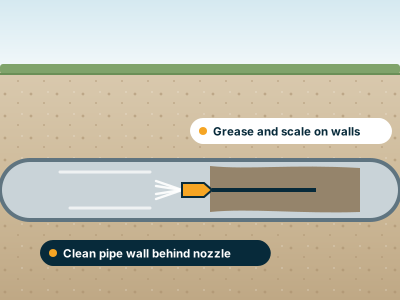
Hydro jetting cleans the inside of a drain or sewer line with a stream of water at very high pressure, delivered through a hose and a specialized nozzle. Instead of punching a hole through a clog, it scours the whole circumference of the pipe and flushes the loosened material downstream.
The nozzle has small openings that point backward. As water leaves those jets, it propels the nozzle forward up the pipe and blasts the walls behind it. Forward-facing jets can break up a plug ahead of the nozzle, and root-cutting heads exist for lines with fine roots.
Jetting is not the first tool for every clog. A standard drain cleaning with a cable clears most one-time blockages. Jetting earns its place when buildup is the problem, not a single object. It is one of the services covered by our drain cleaning service in Zanesville overview.
How hydro jetting works, step by step
Choosing the nozzle and pressure
Kitchen branch lines, a 4-inch main and a root-infiltrated clay lateral each call for different nozzles and pressure. The operator adjusts to the pipe material and condition, which matters on older lines.
Entering at a cleanout
The hose goes in through a cleanout, ideally one that lets the water and debris flow downhill toward the sewer, not back toward the house.
Working the line
The nozzle is advanced and pulled back in passes, each one scouring a stretch of pipe. Debris flows ahead toward the main. On grease lines, hot water helps.
Checking the result
A camera pass after jetting shows whether the wall is clean and reveals defects the buildup was hiding, such as a crack or an offset joint.
Why a camera often comes first
Jetting a pipe that is already broken or collapsing can wash out soil around the break. That is why many providers recommend a camera inspection before jetting an old clay or Orangeburg line.
8 signs a line may need jetting instead of snaking
- The same drain has been snaked more than once in a year.
- The kitchen line clogs every few weeks, especially after big meals or holidays.
- A cable clears the clog but flow never fully returns to normal.
- Camera footage shows a thick coating of grease or scale on the pipe wall.
- Fine roots are entering at joints but the pipe is otherwise intact.
- A floor drain fills with silt or sand that a cable cannot remove.
- Odors linger after cleaning because residue remains in the line.
- You are preparing for a liner, which requires a clean pipe wall to bond to.
Same line clogging again and again? Ask a local provider about jetting.
What builds up inside Zanesville drain lines
Jetting targets buildup, and different homes build up different things.
- Kitchen grease and soap. Fats, oils and dish soap combine into a waxy layer that thickens over years.
- Tuberculation and scale in cast iron. Rust forms lumpy deposits on the inside of old cast iron, narrowing it like a clogged artery.
- Mineral scale. Hard deposits form where water evaporates or sits, common in long flat runs.
- Root hair. Fine roots at clay joints form a mesh that catches paper.
- Sediment. Silt and sand from basement floor drains and old footer connections settle in low spots.
Is jetting a good fit for older Zanesville pipes?
It depends on what the pipe is made of and what shape it is in, and in a city where about four in ten homes were built before 1940, that question comes up on most jetting calls.
Cast iron drain lines inside older homes respond well to jetting when the wall is still thick, because the jet removes the scale that narrows them. Where cast iron has thinned or split along the bottom, aggressive jetting can make a weak spot worse, so the operator lowers pressure or recommends a camera look first.
Clay tile laterals are strong pipe with weak joints. Jetting clears fine roots and grease from clay well, but a joint that is badly offset or a section that is cracked through can lose soil around it when water is forced out of the break. That is the main reason providers want to see a clay line before they jet it.
Plastic drain lines from more recent remodels handle jetting easily. Many Zanesville homes have all three materials in one system, which is why the right answer often changes from one stretch of pipe to the next.
Checks to make before booking jetting
- Confirm it is a buildup problem. If one wipe or toy caused the clog, a cable is enough.
- Know your pipe material if you can. Old clay, Orangeburg or heavily corroded cast iron should be looked at with a camera first.
- Find the cleanout. Jetting needs good access; tell the provider where it is.
- Stop pouring grease. Jetting removes the coating, but it will rebuild if grease keeps going down the drain.
Same line clogging again and again? Ask a local provider about jetting.
What to expect during a hydro jetting visit
- Assessment. The technician asks about past clogs and checks access points.
- Camera first, when warranted. On older lines, a look inside confirms the pipe can handle jetting.
- Setup. The jetter, often a trailer or truck-mounted unit, stays outside while the hose runs to the cleanout.
- Jetting passes. The line is cleaned in sections, from the cleanout toward the main.
- Flush and verify. Water is run through the line and a camera confirms the result.
- Report. You hear what was removed and whether anything structural showed up.
Hydro jetting vs cable snaking: which fits your line?
Both tools clear drains, but they work differently and solve different problems. Many Zanesville visits use both: a cable to open a blocked line quickly, then a jetter to clean it properly once water is moving.
| Question | Cable / snake | Hydro jetting |
|---|---|---|
| What it does | Bores or cuts a path through a blockage | Scours the full pipe wall and flushes debris downstream |
| Best for | Single clogs: hair, wipes, a grease plug, light roots | Recurring clogs from grease, scale, sludge or fine roots |
| Old or fragile pipe | Generally gentle when sized correctly | Needs a camera check first on clay, fiber or thin cast iron |
| How long it lasts | Until the remaining buildup catches the next clog | Usually longer, because the wall is clean |
| Typical cost | Lower | Higher, because of the equipment |
If a cable cleaning has worked before and the clog came back within months, that pattern is the strongest argument for jetting. If the line has only clogged once in years, a cable is usually enough.
What affects the cost of hydro jetting?
Jetting usually costs more than a cable cleaning because of the equipment involved. Ask how these factors apply.
| Factor | Effect on the job |
|---|---|
| Line length | Longer runs to the street need more time and hose. |
| Buildup severity | Heavy grease or scale requires more passes. |
| Camera inspection | Before and after video may be priced separately. |
| Access | A good outdoor cleanout is faster than working through a fixture. |
| Hot water | Some grease jobs call for hot-water jetting. |
When jetting is part of an emergency call
Jetting is usually scheduled maintenance, but a grease plug in a main line can stop all drainage just as fast as a root mass. If water is coming back up a floor drain, stop using water and call. The provider may clear the line with a cable first and recommend jetting once it flows. See the emergency drain service guide.
Hydro Jetting FAQs for Zanesville homeowners
Is hydro jetting safe for old pipes?
It is safe for pipes in sound condition when pressure and nozzle are matched to the material. Pipes that are cracked, collapsing or made of fragile material can be damaged, which is why a camera inspection often comes first on older lines.
How long do the results last?
Longer than a cable cleaning, because the pipe wall is cleaned rather than just opened. How long depends on habits and the pipe. A grease line stays clear longer when grease stays out of the sink.
Does hydro jetting remove tree roots?
Jetting with a root-cutting nozzle can remove fine roots. It does not seal the joint they came through, so roots will return over time unless the joint is repaired or lined.
Is jetting messy?
The water and debris are flushed downstream toward the sewer, not back into the house, when the job is set up correctly from a cleanout. Expect some water around the access point.
How is jetting different from a pressure washer?
A sewer jetter is built to push a hose and nozzle through a long buried pipe with controlled pressure and flow. A household pressure washer is not designed for that, and its attachments can cause backups.
Do I need jetting before a pipe liner?
Usually yes. Liners need a clean wall to bond to, so lines are typically jetted and inspected before lining.
Related services and areas
Grease and root jetting is common in older central neighborhoods such as Putnam and in South Zanesville. Callers in the East End should read about grinder pumps first.